The U.S. Supreme Court on Wednesday took up a case that could determine whether political candidates have the right to challenge election laws in court, hearing arguments in an Illinois dispute over counting mail-in ballots after Election Day.
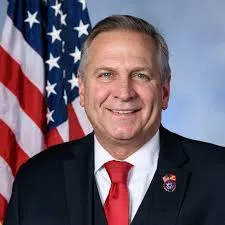
U.S. Rep. Mike Bost, a Republican from Murphysboro, filed the lawsuit in 2022 along with two Illinois delegates for former President Donald Trump. They argue that the state’s policy allowing mail-in ballots postmarked by Election Day to be counted for up to 14 days after polls close violates federal law establishing a single “Election Day.”
Two lower federal courts dismissed the suit, ruling that Bost lacked standing — meaning he couldn’t show that the law personally harmed him. But the Supreme Court’s conservative majority appeared open to revisiting that conclusion.
Illinois Solicitor General Jane Notz, defending the State Board of Elections, faced sharp questioning from several justices. Justice Brett Kavanaugh pressed her about inconsistencies between her written arguments and her presentation in court, at one point warning that her statements seemed to contradict the state’s earlier filings.
Bost’s legal team argued that he suffers financial injury by keeping campaign staff on payroll for up to two extra weeks while ballots are counted. He also claimed that counting late-arriving votes could dilute his overall vote total, potentially undermining confidence in the election.
Notz countered that a candidate’s wish to receive more votes is not a basis for a lawsuit. “The law regulates voters, not candidates,” she said, emphasizing that Bost’s attorneys acknowledged he was not at risk of losing his race. She urged the Court not to use this case to set a new standard for when a candidate can challenge an election rule.
Illinois adopted its 14-day ballot window to ensure votes mailed before Election Day aren’t invalidated due to postal delays. The rule became part of a broader national shift toward mail-in voting — a practice Republicans have more recently embraced after years of skepticism. In 2024, the Illinois Republican Party joined the Republican National Committee’s “bank your vote” initiative, encouraging early and absentee voting to help campaigns focus on persuading undecided voters.
Still, Bost’s case could have implications far beyond Illinois. A ruling in his favor wouldn’t immediately strike down the mail-ballot law but would allow his challenge to proceed in lower courts, potentially opening the door for more candidates to test similar laws in other states.
Notz cautioned that such a precedent could invite lawsuits after nearly every close election. Her argument that Bost’s long experience as a candidate gave him “personal knowledge” of how late-arriving ballots trend politically also drew skeptical reactions from several justices.
The case, though centered on legal standing, carries political weight in a country still divided over how votes are cast and counted. The Supreme Court is expected to issue its ruling by June.